About the Instructor

About the Instructor

Hello!

My name is Janet Kamenick and I live in Indian Trail, North Carolina with my husband and four children.  I have been an ISR instructor for 20 years and have taught over 1,000 children in this time.  I became a Master Instructor in the spring of 2013.

I was introduced to ISR through an article in “American Baby” magazine in the spring of 2001.  After researching the program and moving to Charlotte in July 2002 I enrolled my then 17-month-old daughter in the program and was inspired by the amazing results I saw with her.  I soon began thinking about training as an Instructor.  I began my training in March 2005 and began teaching on my own in May of the same year.  Since then, my sons completed the roll-back-to-float and then became swim-float-swimmers and my youngest completed the swim-float-swim in the spring of 2016.

In order to maintain my ISR Certification and ensure that my skills and techniques continue to meet the highest standards, I undergo yearly ISR re-certification through ISR.   In addition to teaching ISR, I have taught preschool, as well as grades K-5 in elementary schools.  I hold a B.A. in Early Childhood/Elementary Education and French from Juniata College and an M.A. Ed. in Reading Specialization from Virginia Tech. 

  I continue to educate our community about drowning prevention, such that our most precious members will be better protected against this preventable tragedy.
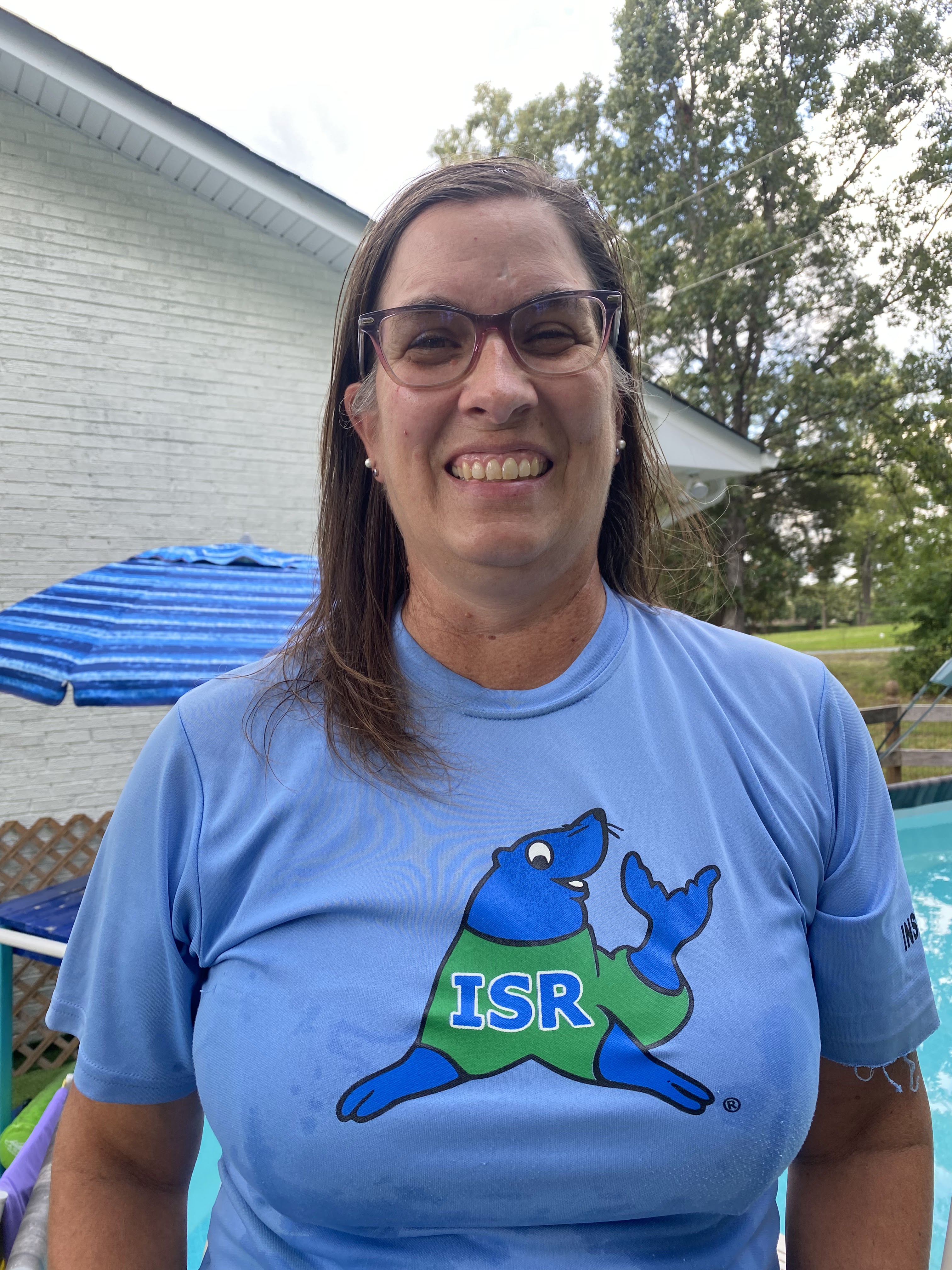
Swim Instructor Image
FAQs
How can you teach babies and young children to swim?
ISR instructors teach infants to swim by honoring each child's individual strengths and experiences. They understand the fundamentals of the behavioral sciences, child development and of sensori-motor learning as it relates to the acquisition of aquatic survival skills; they use this education to guide each child through the sequence of learning to swim and float.
How do you teach them to hold their breath?
Breath holding skills are taught beginning with the first lesson. We shape breath control using highly effective positive reinforcement techniques. We continue to reinforce these breath-holding techniques throughout every lesson.
Can’t babies swim naturally?
Unfortunately, babies cannot naturally swim. If this were the case, there wouldn’t be so many drownings every year. According to the Center for Disease Control and Accident Prevention, drowning is the leading cause of accidental death for children ages 1-4 in the United States.
Why does it take an average of 6 weeks for my child to learn this?
The 6-week average is an estimate that is based on the average time in which it takes most children to learn these survival skills. Every child is unique and ISR’s Self- Rescue program is specifically designed based on your child’s individual strengths and needs. It is important to realize that this is an average which means that some children will actually finish more quickly while others will need more practice. ISR is dedicated to safety and, therefore, we want to provide your child with the time and best opportunity to become proficient in his/her survival skills. We will always honor your child’s needs.

Reach out today

Check out our programs and get started today!